
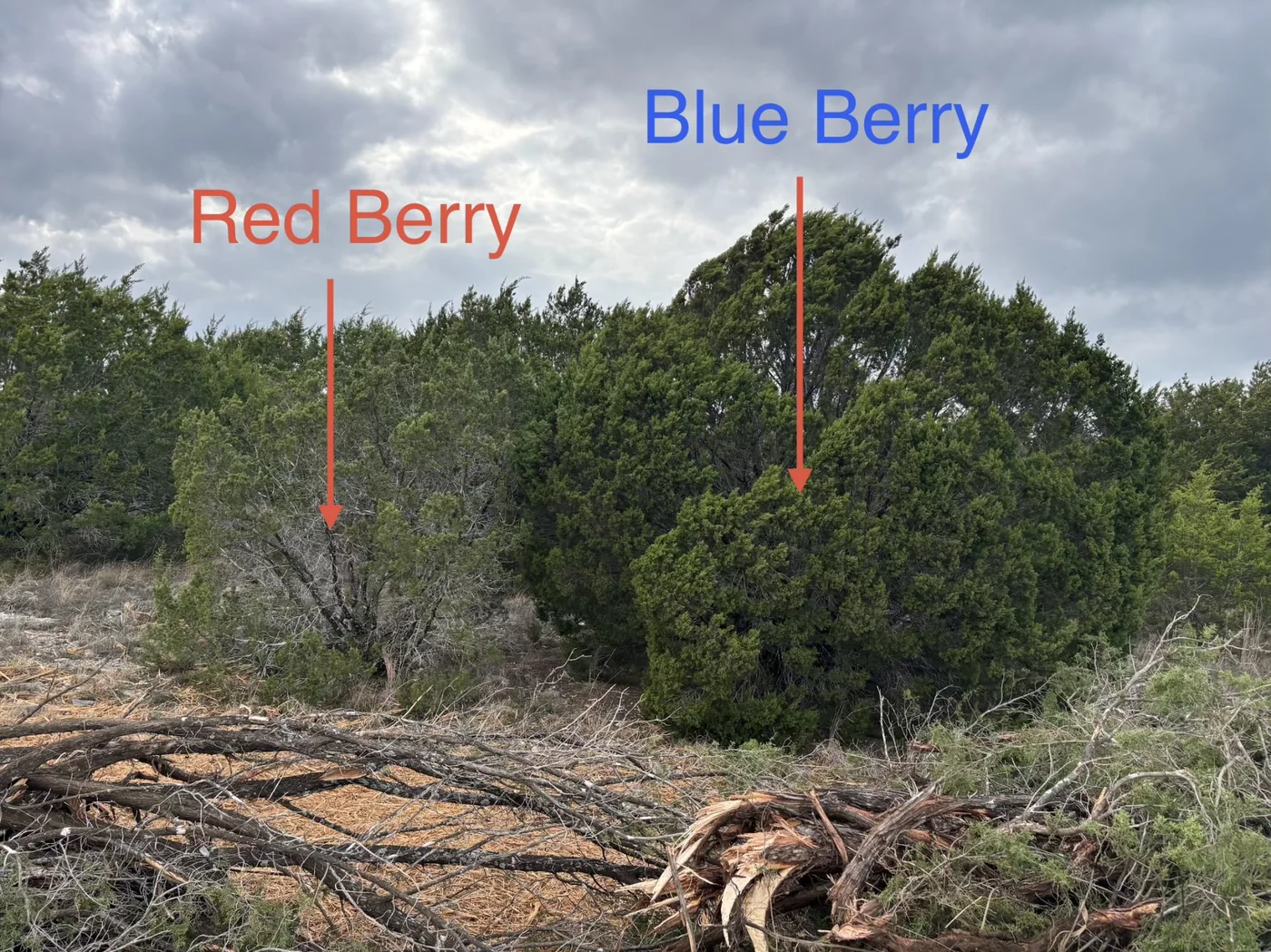
Knowing the difference between these two types of Ashe Junipers, aka Cedar, is absolutely vital when it comes to clearing your land. The reason: Red Berry Cedar will resprout from the root mass underground, but Blue Berry Cedar does not resprout from the root mass underground.
This means it is perfectly fine to clear Blue Berry Cedar with a Forestry Mulcher because once all the green needles have been removed from the stems of the tree, the root mass underground will die, thus eliminating the tree.
However, clearing a Red Berry Cedar with a Forestry Mulcher will not eliminate the tree. It will merely stunt its growth, and the cedar will return from the root mass underground. To effectively eliminate a Red Berry Cedar, you must remove the root mass from the ground with either a dozer or excavator.
The Texas Hill Country is predominantly Blue Berry Cedar, which allows you to successfully clear property with a Forestry Mulcher. As you move further north or west out of the Texas Hill Country into parts of Central Texas and even North Texas, you will find pockets of Red Berry Cedar. You will also find Red Berry Cedar become the dominant species in West Texas. If you are looking to clear your land with a Forestry Mulcher, you want to procure a contractor that understands the difference between the two.
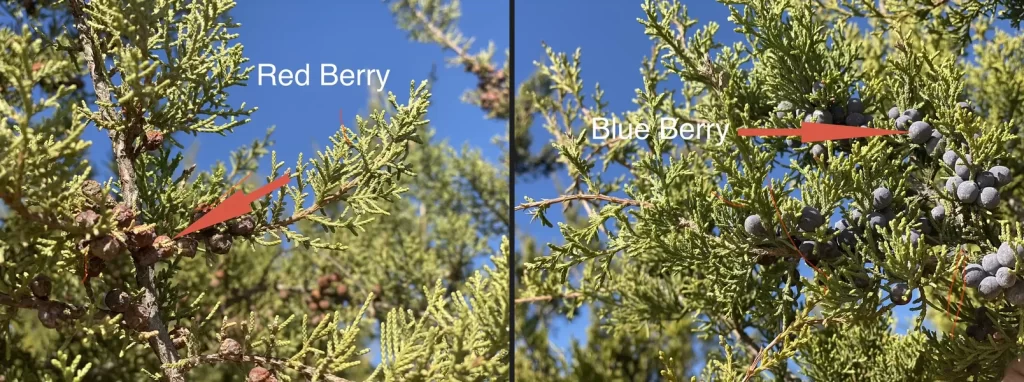
When the berries are on the trees, which is usually between fall and winter months, it is easy to tell the difference. But when the berries fall off the trees, you have to look at the needles of the trees. Typically, a Red Berry Cedar is multi-stemmed from out of the ground and tends to be a lighter shade of green. While Blue Berry Cedar usually has a single trunk at its base and becomes multi-stemmed off of its main trunk. Blue Berry Cedar can also be a darker shade of green or a healthier-looking tree. But sometimes the shades of the trees don’t matter, so then you go to the needles.
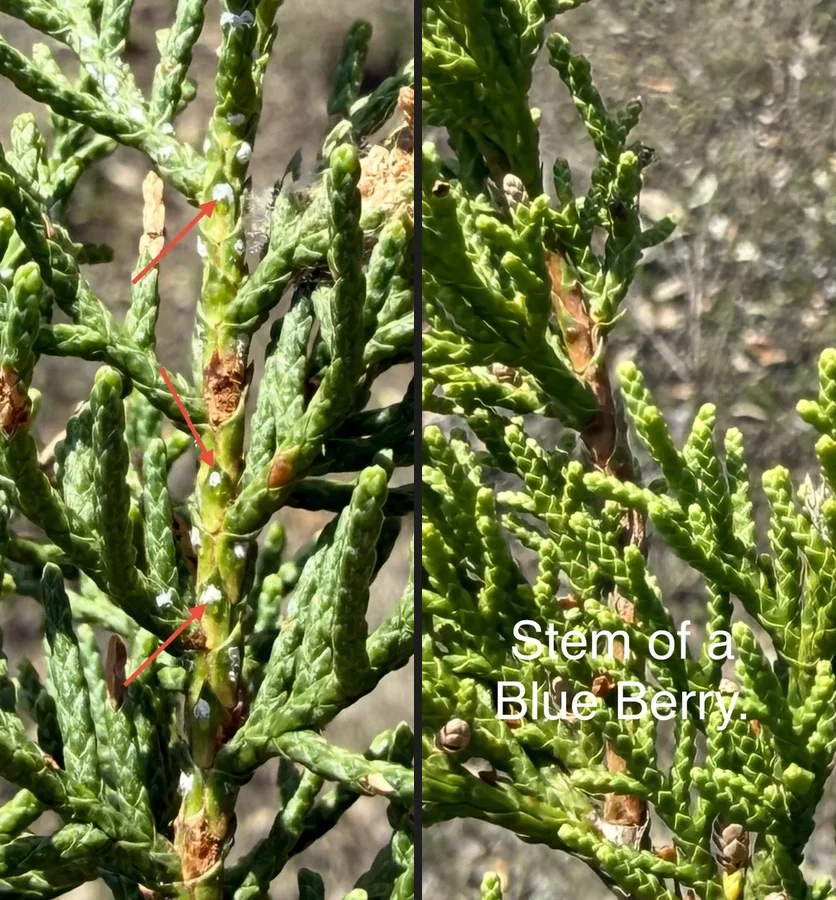
The needles of a Red Berry Cedar produce a white or waxy substance at the base of the needles along the stem. While the Blue Berry Cedars often don’t.
Once you have determined what type of Cedar you are mainly dealing with, then you can better understand which land clearing approach best suits your property.
I use an 80/20 rule. If I find that 80% of your property is covered in Blue Berry Cedar, I will recommend Forestry Mulching, and you can chemically treat the Red Berries that return. However, if we find that it’s covered in Red Berry Cedar 50/50 or more, I generally recommend Grubbing the vegetation out by the roots. At that point we can pile them into burn piles or windrows to be mulched.
Interested in clearing cedar? Schedule a site visit with a member of our team to determine what kind you have and the best approach for your situation.