
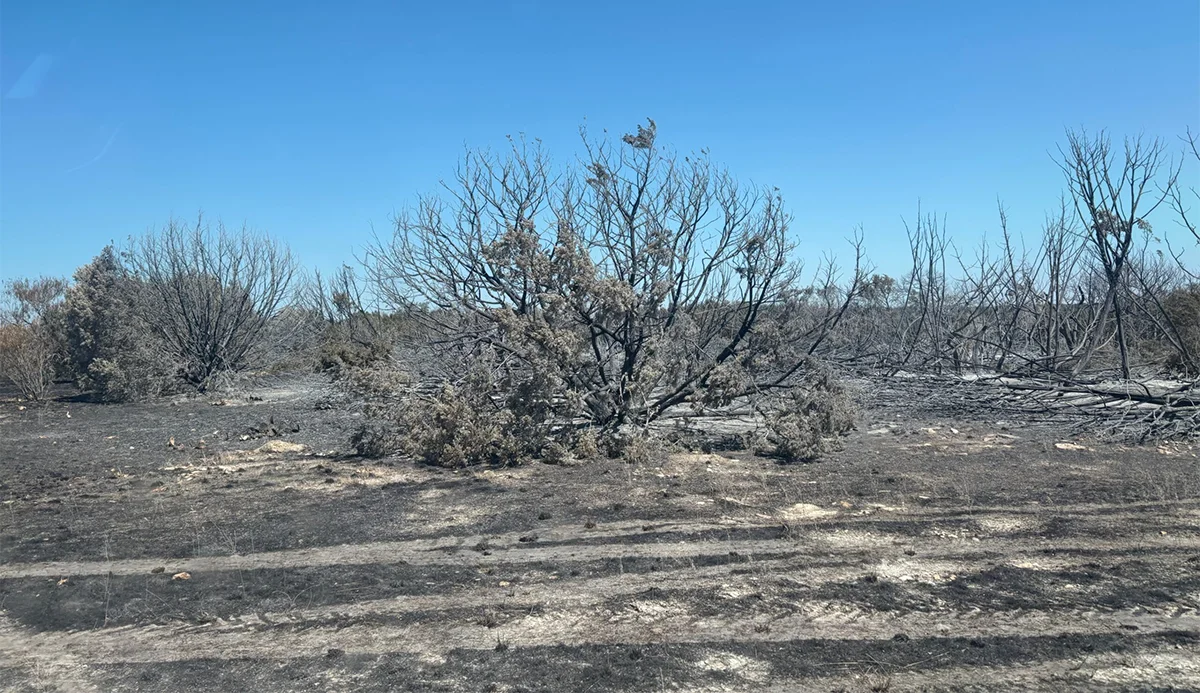
The aftermath of a wildfire can be devastating.
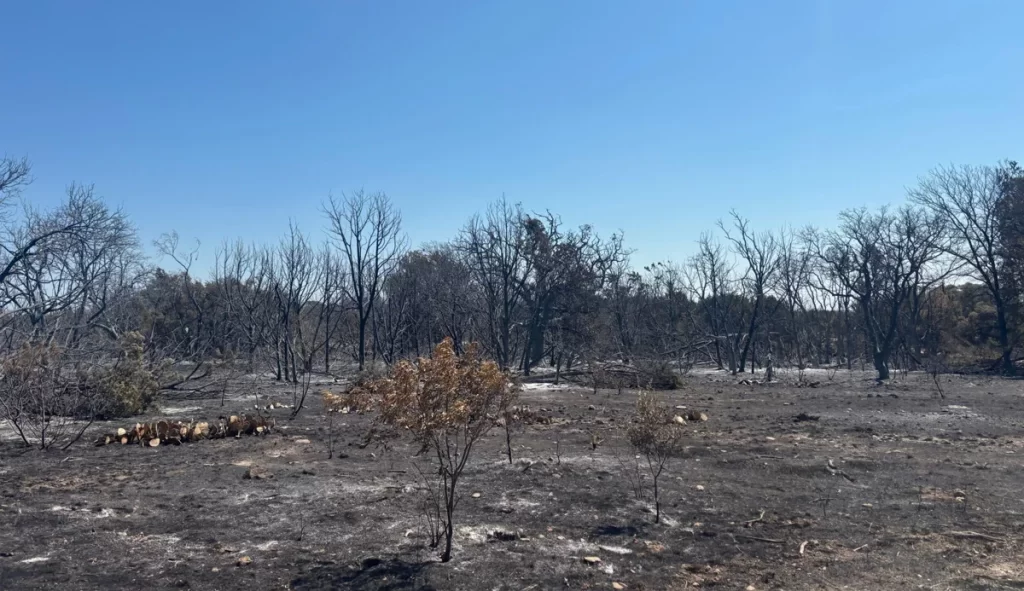
In a matter of hours, a property that took generations to develop can be left blackened and seemingly lifeless. Burned trees, bare ground and acres of charred vegetation can leave a landowner wondering: What do I do now?
In many cases, one of the best answers is also one of the hardest:
Give it time.
While the burned landscape may be painful to look at, immediately clearing everything isn’t always the best approach. Your land has already experienced a major disturbance. Allowing it some time to recover gives you an opportunity to see what survived, what didn’t, and how the property’s natural regeneration will respond.
Don’t Assume Everything That Looks Dead Is Dead
The intensity of a wildfire can vary dramatically across the same property.
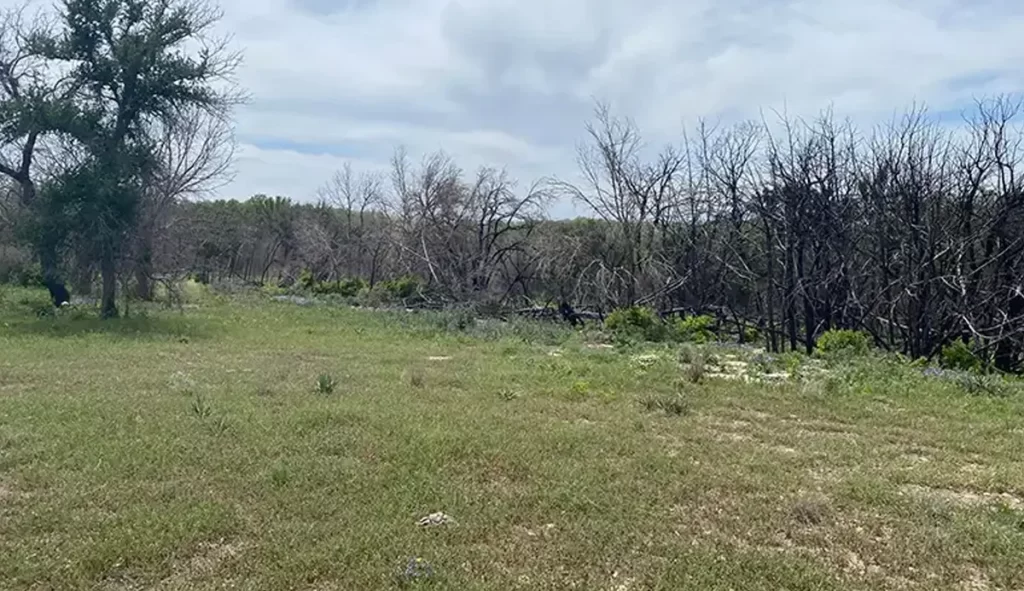
One area may experience extreme heat that kills nearly everything above and below the surface, while another area, a few hundred yards away, may experience a much less severe burn.
That means a blackened tree isn’t necessarily a dead tree.
Texas A&M Forest Service notes that hardwoods can sometimes recover even after complete canopy scorch if the roots, stem, and crown buds remain healthy. Severe damage to the cambium—the living tissue just beneath the bark—is a much stronger indication that a tree will not survive. (Texas A&M Forest Service)
That’s one reason we don’t recommend rushing onto a burned property and removing every tree that looks damaged.
Time will tell you a lot.
Over the following weeks and months, you’ll begin seeing which trees leaf back out, which ones begin re-sprouting and which ones continue declining.
What Happens to Cedar After a Wildfire?
Two common Texas junipers respond very differently to fire.
Ashe juniper, commonly recognized by its blue berries, is a non-sprouting species. If fire kills the tree, it generally will not regenerate from the stump or root crown. Some trees that retain green foliage after a fire may survive, while others may decline as the extent of their damage becomes apparent.
Redberry juniper is different. It has the ability to resprout from buds near the base of the plant. A wildfire can kill the upper portion of the tree while leaving the root system and basal buds alive. New growth can then emerge around the bottom of what appears to be a dead tree. (Texas A&M Natural Resources Institute)
This distinction becomes important when deciding what vegetation should eventually be mulched and what should be retained or managed differently.
Your Hardwoods May Surprise You
Oaks, mesquite and other hardwoods can also respond dramatically after a wildfire.
Some mature trees will survive. Others will die because the fire damaged their cambium, roots or vascular system beyond recovery. Still others may lose most or all of their original aboveground structure but begin producing new shoots from surviving portions of the tree or root system.
Texas A&M Forest Service recommends evaluating several factors rather than judging a hardwood solely by its burned canopy. Trunk damage, bark separation, cambium condition, root damage and the return—or absence—of green foliage all provide clues about survival.
(Texas A&M Forest Service)
This is where patience can pay off.
A tree that looks terrible immediately after the fire may show signs of recovery months later. Conversely, another tree that initially retains some green foliage may continue declining.
Watch What’s Happening on the Ground
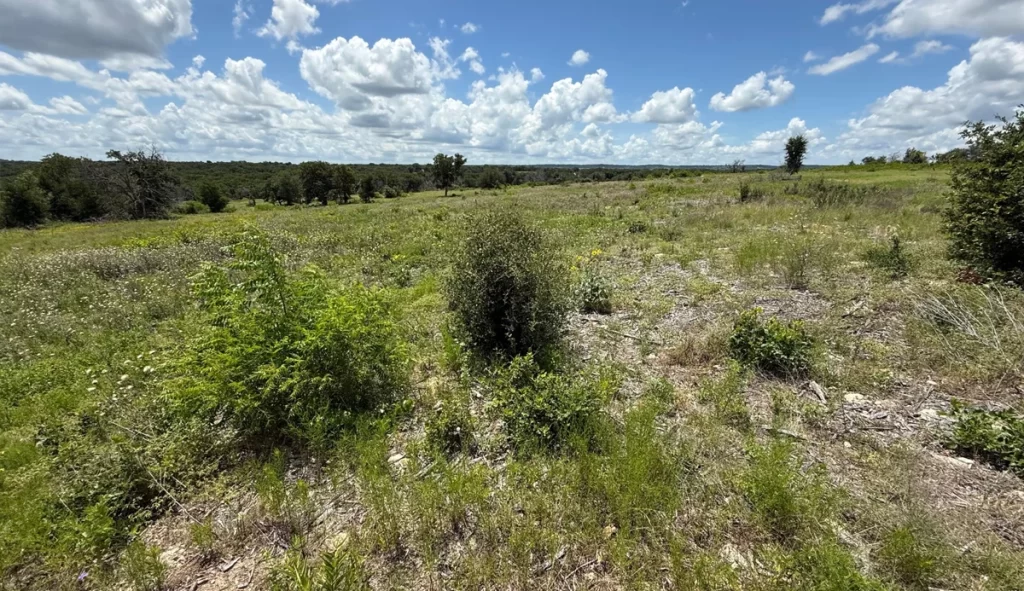
One of the most encouraging parts of wildfire recovery is that it often happens much faster.
The ground starts turning green again.
Depending on rainfall, soil conditions and the severity of the burn, grasses and other herbaceous plants can begin returning surprisingly quickly. Wildflowers, annuals and other early-successional plants may also appear across the disturbed ground.
But landowners should pay attention to what comes back.
Disturbed ground provides opportunities for desirable native vegetation, but it can also provide opportunities for invasive or undesirable woody plants. Texas A&M Forest Service recommends monitoring post-fire properties and managing undesirable vegetation as the recovery progresses. (Texas A&M Forest Service)
Why We Often Recommend Waiting Before Mulching
At Cedar Eaters, we generally recommend giving a wildfire-damaged property significant recovery time before beginning large-scale forestry mulching—often up to a year where site conditions and safety allow.
That waiting period gives you a much clearer picture of the property.
You can identify trees that survived.
You can see which hardwoods are resprouting.
You can identify cedar and other vegetation that is unquestionably dead.
You can observe where grasses and desirable vegetation are returning.
And after several rainfall events, ash and loose surface material have had more opportunity to settle.
There are exceptions. Dead or severely damaged trees near homes, roads, fences, utilities or frequently traveled areas can become safety hazards and may need to be addressed much sooner. Texas A&M Forest Service recommends prioritizing hazardous snags rather than simply leaving every burned tree standing. (Texas A&M Forest Service)
Turning Dead Vegetation Into Part of the Recovery
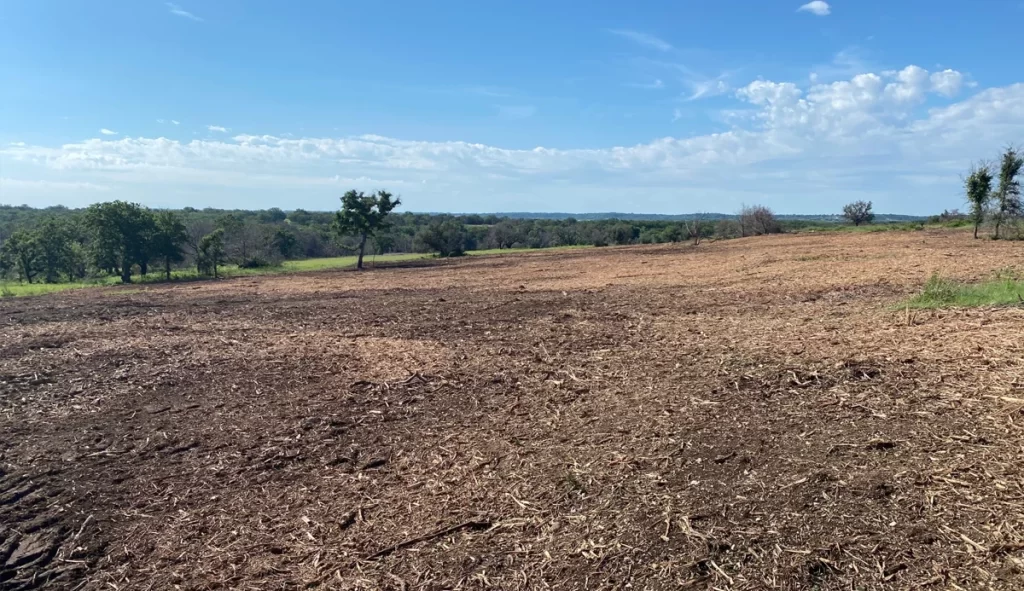
Once the property has had time to reveal what survived, forestry mulching can become a valuable restoration tool.
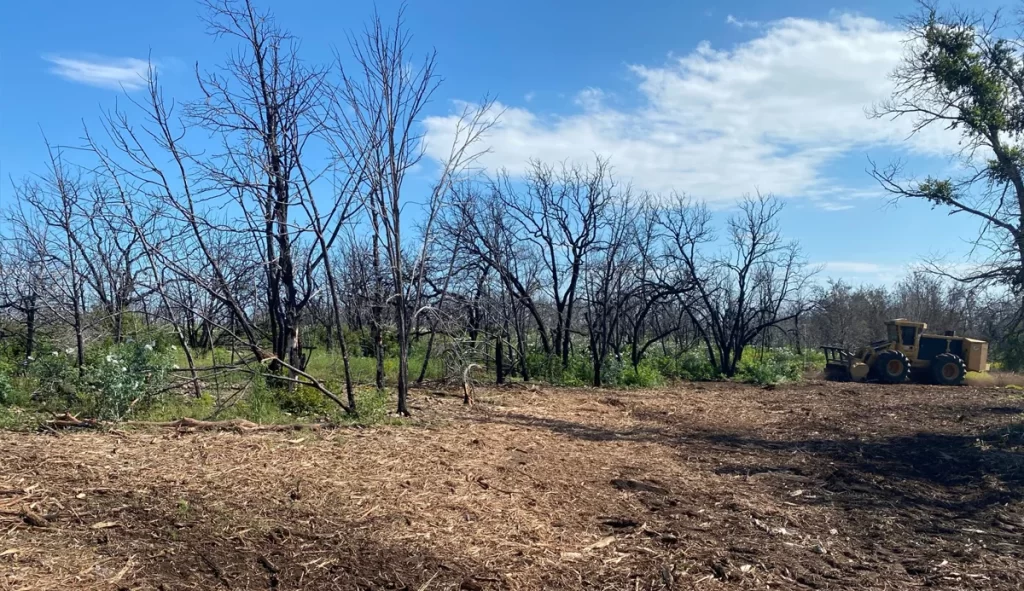
Instead of pushing burned trees into piles or disturbing large areas of soil with conventional clearing methods, a forestry mulcher can selectively grind dead woody vegetation and distribute the resulting material across the ground.
That accomplishes several things at once.
The burned stems and standing dead vegetation are removed from view. Woody material is converted into organic material at the soil surface. Ground disturbance can be minimized compared with methods that uproot trees. And the mulch layer can help protect exposed soil from rainfall impact and surface erosion while the vegetation underneath continues recovering.
Most importantly, the work can be selective.
We’re not simply clearing everything that’s standing.
A forestry mulcher can work around surviving trees and desirable vegetation while targeting dead cedar, burned brush and other unwanted material.
Saving the Next Generation of Hardwood Growth
One of the most interesting opportunities after a wildfire occurs around damaged hardwoods.
An older oak or mesquite may have been severely damaged aboveground while its established root system remains capable of producing vigorous new growth.
Instead of automatically grinding the entire plant, we can evaluate that regeneration and work around desirable shoots.
On some restoration projects, Cedar Eaters hand crews follow behind the forestry mulcher and selectively remove dead portions of damaged hardwoods while preserving promising new growth around the base.
The goal isn’t simply to make the property look clean.
The goal is to help determine what the next version of that property should become.
A Burned Property Doesn’t Have to Stay a Burned Property
Immediately after a wildfire, it can be difficult to imagine the landscape looking healthy again.
But land is remarkably resilient.
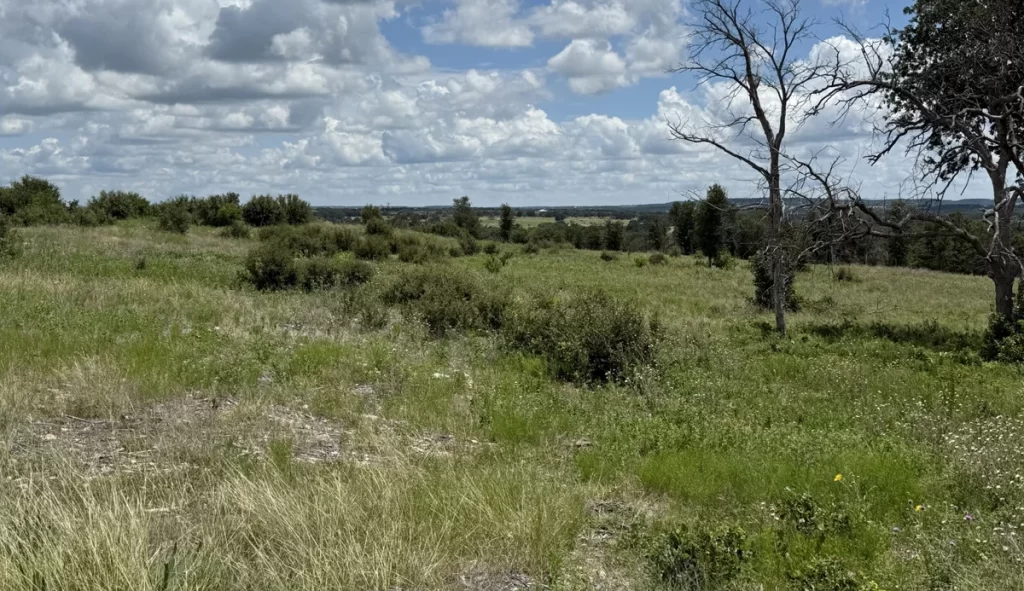
Given rainfall, time and thoughtful management, grasses return. Wildflowers appear. Surviving trees put on new growth. Hardwood root systems send up new shoots. And eventually, the blackened landscape begins to change.
That’s when forestry mulching can help move the recovery into its next phase.
The same dead vegetation that once stood as a reminder of the wildfire can be processed and returned to the ground as mulch. Surviving trees can be protected. Desirable hardwood regeneration can be retained. And the visual scar left by the fire can gradually become a recovering Texas landscape.
After a wildfire, don’t be too quick to judge what you’ve lost. Give the land some time to show you what survived. Then develop a plan around what comes back.
At Cedar Eaters of Texas, we’ve spent 25 years working with Texas landowners to restore and improve their land through selective forestry mulching.
Want to See What Wildfire Recovery Can Look Like?
Learn more how forestry mulching used on wildfire burn areas.
Cedar Eaters of Texas
25 Years of Reviving Texas Lands